Stylish Back-to-School Study Space Ideas for Teens


Back-to-school season is the perfect time to rethink one of the most important spaces in a teenager’s bedroom: the study area.
A desk can easily become the place where everything ends up—school papers, chargers, notebooks, headphones, half-finished projects, and all the little things that never seem to have a proper home. And when the workspace starts to feel cluttered or uncomfortable, it becomes much harder for the rest of the room to feel calm and organized.
But a practical study space does not have to look like a classroom.
I am always drawn to rooms where storage and function feel naturally integrated into the design. A beautiful desk with real storage, a comfortable chair, good lighting, and a few well-chosen organizers can completely change how a bedroom works without making it feel overly functional or childish.
This is especially important for teenagers. Their rooms need to do much more than provide a place to sleep. They are often study spaces, places to relax, get ready, spend time online, work on hobbies, and increasingly, spaces that should reflect a more grown-up personal style.
The goal is not to create a perfectly styled desk that never gets used. It is to create a workspace that can handle real everyday life while still feeling like a thoughtful part of the bedroom.
So I pulled together some of my favorite back-to-school study space ideas—from desks with smart storage and comfortable chairs to wall organization, task lighting, and simple ways to keep school supplies under control.
Whether you are working with a large teen bedroom or trying to create a functional study corner in a small space, these ideas can help make the workspace feel more organized, practical, and beautifully put together.
For more practical storage ideas, you can also explore My favorite Amazon organization finds.
Stylish Back-to-School Study Space Ideas for Teens: What to Prioritize
Create a Teen-Friendly Study Zone
A productive study space does not need to look like a classroom.
In fact, I think the most successful teen workspaces are the ones that feel like a properly designed part of the bedroom.
Choose furniture that looks mature, prioritize closed storage, and keep the overall palette connected to the rest of the room. A desk that feels beautiful and comfortable is much more likely to be used than a temporary workstation squeezed into an empty corner.

1. Choose a Desk That Stores More Than It Shows.
A minimal writing desk can look beautiful in a product photo, but it may quickly become impractical once notebooks, chargers, textbooks, pens, and a laptop arrive.
For an everyday study space, I would choose a desk with at least one or two drawers. A desk with an additional cabinet, small hutch, or integrated shelving can be even more useful when floor space is limited.
The key is to avoid anything that feels too childish or overly bulky.
A simple wood desk, a softly painted finish, or a clean modern silhouette can work throughout the teenage years and eventually transition into a guest room or home office.
What to Look For
At least one closed drawer
Enough depth for a laptop and an open notebook
Integrated cable access when possible
A finished back if the desk will not sit against a wall
A style that complements the bedroom furniture
Enough legroom for a proper desk chair
Here are a few pieces I’ve carefully selected to help you narrow things down.


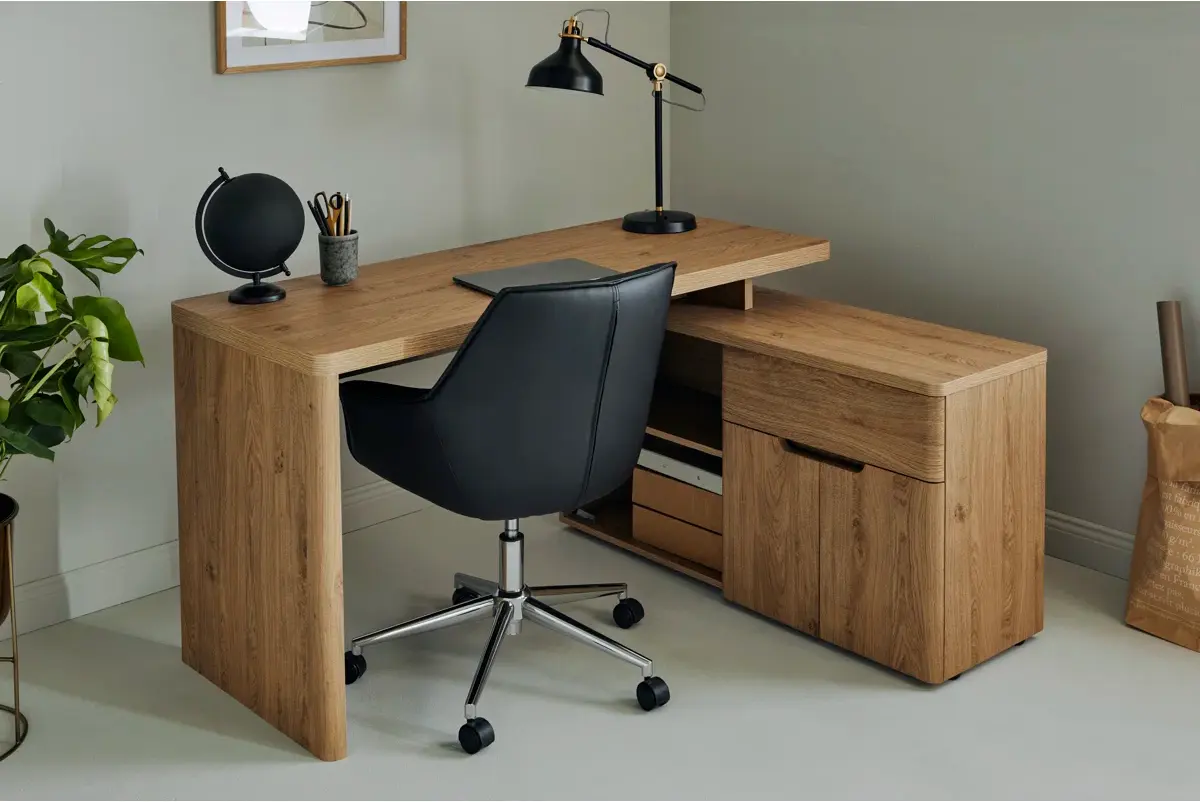
This one is my top choice if you need plenty of storage but don’t have much space in the bedroom. It’s perfect. I especially love the sliding side door and the built-in power outlets on top.


2. Invest in a Comfortable, Grown-Up Desk Chair
The chair should never be an afterthought.
A basic dining chair may look attractive, but it is rarely comfortable enough for longer homework or study sessions. At the same time, a large corporate office chair can completely overwhelm a bedroom.
I prefer a middle ground: a compact upholstered office chair, a curved swivel chair, or an adjustable chair with a clean silhouette.
It should provide real support while still feeling connected to the room.
For a more polished look, repeat one of the bedroom’s existing materials or colors. A cream bouclé chair can soften a dark wood desk, while a warm tan, muted green, or deep blue chair can add depth to an otherwise neutral space.


I absolutely love this one because, if you’re a cat mom like me, being able to fold the armrests out so your little companion can stay close while you work is such a great feature! 🐾


3. Use the Wall Above the Desk
When a bedroom is short on space, the wall above the desk is often more valuable than the floor around it.
A pair of floating shelves can hold books, small storage boxes, framed art, and a few decorative objects without taking up additional room.
A wall-mounted cabinet offers even more concealed storage if the desk tends to become cluttered.
The mistake I would avoid is filling every inch of the wall. Leave enough empty space for the arrangement to feel calm.
A functional study area can still have breathing room.
For a balanced setup, combine:


4. Add Proper Task Lighting
Good lighting can make even a very small desk feel more intentional.
Choose a lamp that directs light toward the work surface without taking over the entire desk. Adjustable lamps are practical, but they do not need to look industrial.
There are plenty of sculptural table lamps, wall-mounted reading lights, and slim desk lamps that provide focused lighting while still looking polished.
When the desk is very narrow, a wall-mounted sconce can free up valuable surface space. A rechargeable lamp can also be useful when the nearest outlet is inconvenient.
I would stay away from harsh blue-white lighting and choose a warmer light that feels comfortable in the evening.


5. Create a Grab-and-Go Supply System
Not every pen, notebook, and school supply needs to remain visible.
Keep the items used every day in the top desk drawer or in one attractive desktop organizer. Less frequently used supplies can go inside a cabinet, storage box, or small rolling cart beside the desk.
A three-tier cart can be particularly useful because it can hold school supplies, craft materials, technology accessories, or even beauty products later.
It is flexible enough to change as the room’s needs change.
To keep the system manageable, divide supplies into broad categories rather than creating a separate container for every small item.
For example:
Writing supplies
Paper and notebooks
Technology
Art or project materials


Final Thoughts
A good study space does not need to be large, complicated, or filled with school-specific furniture.
What matters most is creating a setup that feels comfortable to use every day, provides enough storage to keep clutter under control, and still looks like a natural part of the bedroom.
A desk with proper drawers, a supportive chair, good lighting, a few well-placed shelves, and simple storage for everyday supplies can make a surprisingly big difference.
I also think it is worth choosing pieces that can grow with the room. A well-designed desk, a beautiful task chair, or a set of floating shelves should still feel relevant long after the school year is over.
The goal is really to create a space that feels organized without feeling overly organized, functional enough for real life, but still personal, comfortable, and grown-up.
If you are refreshing a teen study space this back-to-school season, start with the pieces that will have the biggest impact, then build the rest of the setup around them.
You can shop more of my favorite desks, chairs, lighting, and organization finds on my .
For more home decor ideas and inspiration, explore my other articles !


Comments